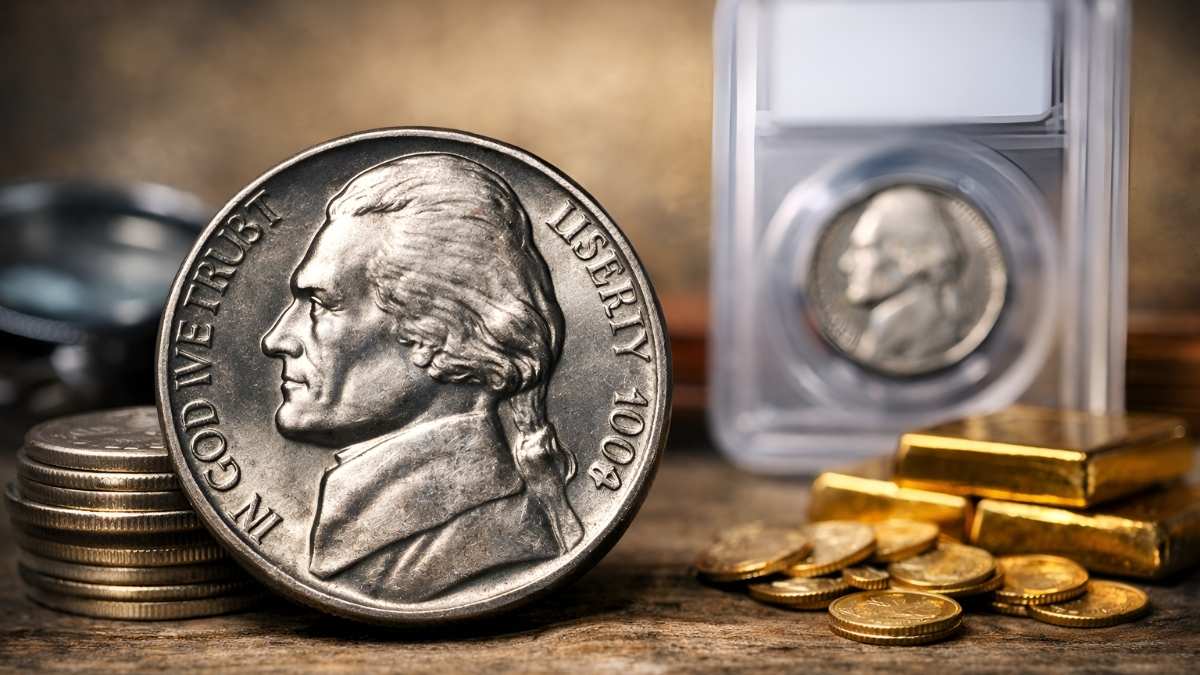
1964 Jefferson Nickel Value Guide: The Jefferson nickel has been a cornerstone of American coinage since its introduction in 1938. Designed by Felix Schlag, it features a portrait of Thomas Jefferson on the obverse and his Monticello home on the reverse. While most Jefferson nickels are common, the 1964 issue stands out for its historical context, massive production numbers, and the presence of rare varieties and errors that make certain examples worth holding. In 2026, collectors continue to pay close attention to the 1964 Jefferson nickel, with values ranging from face value to hundreds or even thousands of dollars depending on rarity and condition.
Historical Background of the 1964 Jefferson Nickel
The year 1964 was a pivotal moment in U.S. coinage history. Rising silver prices led to widespread hoarding of coins, and the U.S. Mint responded by dramatically increasing production of nickels, dimes, and quarters. The 1964 Jefferson nickel was struck in enormous numbers, with billions produced at both the Philadelphia and Denver mints. Despite this, certain varieties and minting errors have made some 1964 nickels rare and valuable. Collectors prize these coins not only for their scarcity but also for their connection to a turbulent period in American monetary history.
Design Features of the 1964 Nickel
The 1964 Jefferson nickel retained the classic design introduced in 1938. The obverse features Jefferson’s portrait facing left, with the word “Liberty” and the date inscribed. The reverse depicts Monticello, Jefferson’s Virginia estate, along with the inscriptions “E Pluribus Unum,” “United States of America,” and “Five Cents.” While the design remained unchanged, the sheer volume of coins produced in 1964 led to variations in strike quality, with some examples showing weak details and others displaying sharp, well-defined features.
Mint Locations and Production
The 1964 Jefferson nickel was produced at two primary U.S. Mint facilities: Philadelphia and Denver. Philadelphia coins carried no mint mark, while Denver coins bore a “D” mint mark on the reverse. Together, these mints produced billions of nickels, making the 1964 issue one of the most common in circulation. However, within this massive production run, rare varieties and errors emerged, creating opportunities for collectors to find valuable pieces.
Rare Varieties and Errors
Several rare varieties and errors make the 1964 Jefferson nickel worth holding. Among the most notable are double die obverse and reverse varieties, which show doubling in the lettering or design elements. Off-center strikes and coins struck on the wrong planchet also exist, adding to the rarity. Some nickels display full steps on Monticello, a feature highly prized by collectors because it indicates a strong strike. These full-step nickels are far scarcer than their weakly struck counterparts and command significant premiums in the market.
Value Chart for the 1964 Jefferson Nickel
The value of a 1964 Jefferson nickel depends on condition, mint mark, and rarity. Below is a general collector’s chart for 2026:
- Circulated common 1964 nickel: face value
- Uncirculated mint state examples: $1 to $5
- Full-step nickels in mint state: $20 to $200 depending on grade
- Double die error varieties: $100 to $1,000 depending on severity and grade
- Off-center strike errors: $50 to $300 depending on percentage off-center
- Wrong planchet errors: $500 to $2,000 depending on rarity
- Exceptional mint state or prooflike examples: potentially $3,000 or more
These values reflect general market trends in 2026 and can fluctuate based on collector demand and auction results.
Collector Demand in 2026
In 2026, collector demand for the 1964 Jefferson nickel remains strong. Its historical significance, combined with the presence of rare varieties, ensures ongoing interest. Many collectors seek to complete Jefferson nickel sets, and the 1964 issue is a key component. Full-step nickels and error varieties are especially prized, with auctions often showcasing record-breaking sales. The nostalgia associated with the coin also drives demand, as it represents a pivotal era in U.S. coinage history.
Authentication and Grading
Authentication and grading are essential when dealing with valuable 1964 Jefferson nickels. Professional grading services evaluate coins based on strike quality, surface preservation, and overall eye appeal. Coins graded at higher levels, such as MS-67 or MS-68 with full steps, command significant premiums. Collectors should always verify authenticity, especially when purchasing rare varieties, to avoid counterfeits or altered coins.
Investment Potential of the 1964 Jefferson Nickel
Beyond its historical and cultural significance, the 1964 Jefferson nickel represents a unique investment opportunity. As a tangible asset, it offers diversification for collectors and investors. While the market can fluctuate, rare varieties and high-grade examples have historically appreciated in value. In 2026, demand for full-step nickels and error varieties remains strong, suggesting continued growth in value for well-preserved examples.
Auction Trends and Market Activity
Auctions play a major role in determining the value of rare 1964 Jefferson nickels. High-profile sales often set benchmarks for pricing, with rare varieties achieving record-breaking results. Private sales also contribute to market activity, with collectors willing to pay premiums for unique examples. The combination of public auctions and private transactions ensures a dynamic market where values continue to evolve.
Preservation and Storage
Proper preservation is critical for maintaining the value of rare 1964 Jefferson nickels. Coins should be stored in protective holders to prevent scratches, tarnish, or environmental damage. Avoid handling coins with bare hands, as oils and dirt can affect surfaces. Climate-controlled storage is recommended for long-term preservation, ensuring that coins retain their original luster and condition.
Conclusion
The 1964 Jefferson nickel stands as a symbol of both abundance and rarity in American coinage. While billions were produced, rare varieties such as double die errors, off-center strikes, and full-step nickels make certain examples worth holding. Understanding the value chart, factors influencing pricing, and strategies for collecting ensures that enthusiasts can make informed decisions. As auctions and private sales continue to highlight the allure of these coins, the 1964 Jefferson nickel remains a must-have for serious collectors and investors alike.