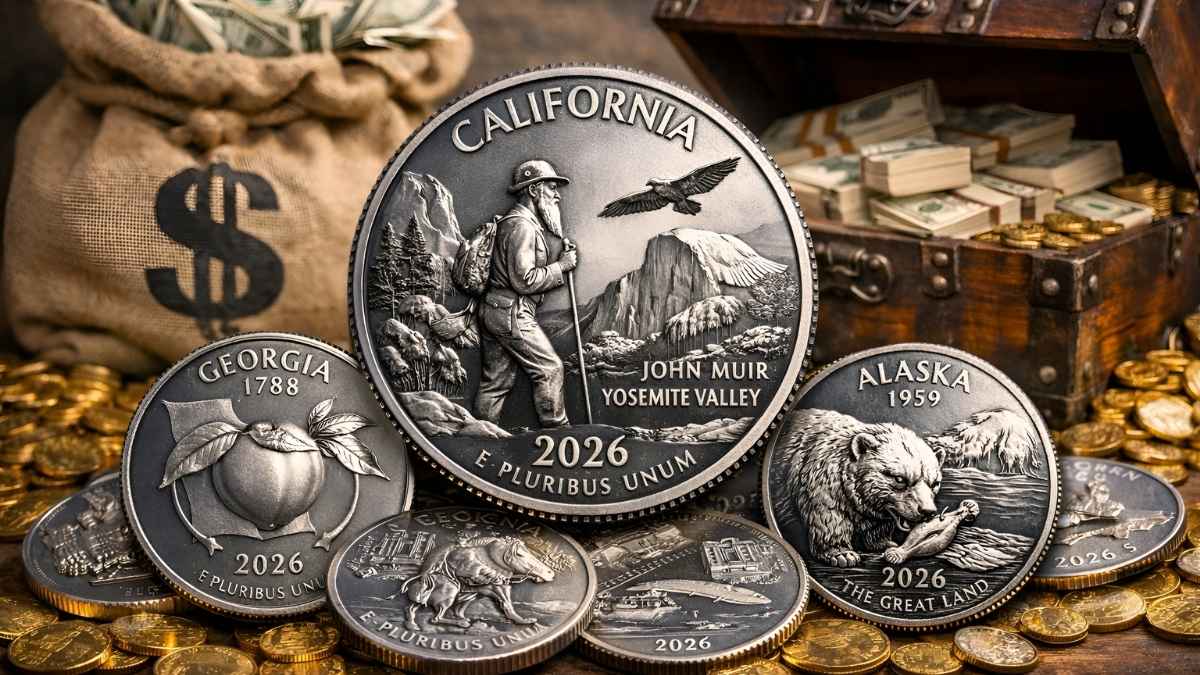
2026 Rare State Quarters: The 50 State Quarters Program, launched by the United States Mint in 1999 and completed in 2008, remains one of the most successful coin initiatives in American history. Each state was honored with a unique design on the reverse of the quarter, celebrating its culture, history, and symbols. The program sparked a nationwide interest in coin collecting, with millions of people checking their pocket change in hopes of finding rare varieties. While most state quarters are common, certain rare issues and minting errors have become incredibly valuable, with some specimens in 2026 worth over $21 million collectively.
Why State Quarters Can Be Worth Millions
The value of state quarters is determined by rarity, condition, and collector demand. Minting errors such as double strikes, missing details, or unusual variations often create unique coins that command high prices. Limited production runs also contribute to rarity, as fewer coins in circulation increase demand. Condition is critical, with uncirculated coins or those graded at high levels fetching far more than worn examples. In 2026, collectors continue to prize these rare finds, making state quarters a fascinating area of numismatics.

2004 Wisconsin Extra Leaf Quarter
The Wisconsin quarter is one of the most famous and valuable coins in the series. Released in 2004, it features a cow, a wheel of cheese, and a corn stalk. Some coins were struck with an extra leaf on the corn, creating two varieties known as the “extra high leaf” and “extra low leaf.” These errors are highly sought after, with values ranging from hundreds to thousands of dollars depending on condition. The Wisconsin extra leaf quarter remains a favorite among collectors due to its distinctive design anomaly.
1999 Delaware Spitting Horse Quarter
The Delaware quarter, the first in the series, features Caesar Rodney on horseback. A minting error caused a die crack that makes it appear as though the horse is spitting. This unusual flaw quickly became popular among collectors. While not as rare as some other varieties, the “spitting horse” quarter is still valuable, especially in uncirculated condition. Its quirky nickname and distinctive appearance make it one of the most memorable coins in the state quarter program.

2005 Kansas In God We Rust Quarter
The Kansas quarter of 2005 is known for a striking error where the phrase “In God We Trust” appears as “In God We Rust.” This occurred due to grease filling the die during minting, obscuring part of the lettering. The error created a coin that is both humorous and highly collectible. Values vary depending on condition, but well-preserved examples can command significant premiums. The Kansas quarter demonstrates how small mistakes can create lasting fascination among collectors.
2000 South Carolina Quarter Error Strike
The South Carolina quarter, released in 2000, occasionally appears with off-center strikes or other minting errors. These variations are rare and can be worth far more than their face value. Collectors prize such coins for their uniqueness, as each error strike creates a one-of-a-kind piece. The South Carolina error quarters highlight the importance of careful observation, as even subtle differences can translate into big money.

2002 Mississippi Quarter Double Strike
The Mississippi quarter, featuring the magnolia flower, is known for rare double strike errors. In these coins, the design appears twice due to a misalignment during minting. Double strike errors are highly collectible because they are visually striking and unmistakable. Depending on condition, these quarters can sell for hundreds of dollars. The Mississippi double strike quarter demonstrates how minting mishaps can transform ordinary coins into extraordinary finds.
2003 Missouri Quarter Missing Clad Layer
The Missouri quarter of 2003 occasionally appears without its outer clad layer, exposing the copper core beneath. This error creates a distinctive appearance, with the coin showing a reddish tone instead of the usual silver color. Missing clad layer errors are rare and highly valued by collectors. The Missouri quarter with this flaw is a prime example of how production anomalies can elevate a coin’s worth dramatically.
2007 Montana Quarter Double Die Error
The Montana quarter, released in 2007, features a bison skull design. Some specimens exhibit a double die error, where the lettering or design elements appear doubled. These coins are rare and can command significant premiums, especially in uncirculated condition. The Montana double die quarter is a striking example of how minting errors continue to intrigue collectors and drive values upward.
2008 Arizona Quarter Cactus Overprint Error
The Arizona quarter of 2008 showcases the Grand Canyon and a saguaro cactus. In some error varieties, the cactus appears to cover part of the state’s name, creating a distinctive and unusual design. These quarters are rare and highly collectible, with values far exceeding their face value. The Arizona cactus error quarter highlights the creativity and unpredictability of minting anomalies.
2005 Minnesota Extra Tree Quarter
The Minnesota quarter, released in 2005, features a scene with trees and a lake. Some error varieties show an extra tree in the design, making them unique and highly sought after. Depending on condition, these quarters can sell for hundreds of dollars. The Minnesota extra tree quarter is a favorite among collectors, combining artistic appeal with rarity.
The Role of Condition and Grading
Condition is one of the most important factors in determining a coin’s value. Coins are graded on a scale that ranges from poor to mint state, with higher grades commanding significantly higher prices. Professional grading services provide authentication and standardized assessments, giving buyers confidence in their purchases. For state quarters, grading is essential to establishing value and ensuring that collectors know exactly what they are acquiring.
Investment Potential of Rare State Quarters
Rare state quarters are not just collectibles; they are also investments. Their limited supply and growing demand make them attractive assets for collectors and investors alike. Unlike traditional investments, coins carry intrinsic value due to their metal content and historical significance. In 2026, many investors continue to diversify their portfolios by including rare coins, recognizing their ability to preserve wealth and appreciate over time. The market for rare state quarters remains strong, driven by both passion and financial opportunity.
Stories That Enrich Collecting
Each rare state quarter carries a story that enriches its appeal. The Wisconsin extra leaf quarter tells of a design anomaly, while the Delaware spitting horse quarter reflects a quirky minting error. The Kansas “In God We Rust” quarter showcases how humor can emerge from mistakes, and the Arizona cactus error highlights the unpredictability of minting. Collectors often cherish these stories as much as the coins themselves, as they provide a deeper connection to history and culture.
Challenges in Collecting Rare Quarters
Collecting rare state quarters is not without challenges. Counterfeiting remains a concern, with advanced techniques making it difficult to detect fakes. Market fluctuations can also affect values, requiring collectors to stay informed and cautious. Proper storage and preservation are critical, as environmental factors can damage coins and reduce their worth. Collectors must remain vigilant, relying on expertise and trusted sources to navigate these challenges successfully.
Technology’s Role in Modern Coin Collecting
Technology has transformed coin collecting, making it more accessible and secure. Online auctions allow collectors to participate from anywhere in the world, while digital catalogs provide detailed information and images. Blockchain technology is being explored for authentication, offering new ways to verify provenance. In 2026, technology continues to enhance the collecting experience, opening doors for a new generation of enthusiasts who can appreciate rare state quarters in innovative ways.
Building a Collection of Rare State Quarters
For aspiring collectors, building a collection of rare state quarters requires patience, knowledge, and strategy. Starting with affordable coins and gradually moving toward rarer pieces is a common approach. Networking with experienced collectors and attending auctions can provide valuable insights. The journey of discovery and acquisition is as rewarding as owning the coins themselves. In 2026, building a collection remains a fulfilling pursuit, offering both personal satisfaction and potential financial gain.
Rare Coins as Cultural Heritage
Rare state quarters are more than collectibles; they are cultural heritage. They preserve the artistry, politics, and economies of past eras. The state quarter program itself was a celebration of American diversity, showcasing the unique identity of each state. Collectors play a vital role in safeguarding this heritage, ensuring that future generations can appreciate the legacy of American coinage.
Conclusion
The top ten rare state quarters worth over $21 million collectively represent far more than their modest face value. They embody history, artistry, and human achievement, transforming everyday currency into treasures of immense worth. From the Wisconsin extra leaf quarter to the Minnesota extra tree variety, these coins continue to captivate collectors and investors alike. The ultimate guide to rare state quarters is not just about identifying valuable pieces but about appreciating the stories they tell, the challenges they present, and the legacy they carry into the future. In 2026, the passion for rare coins remains strong, ensuring that treasures like these will continue to inspire generations to come.