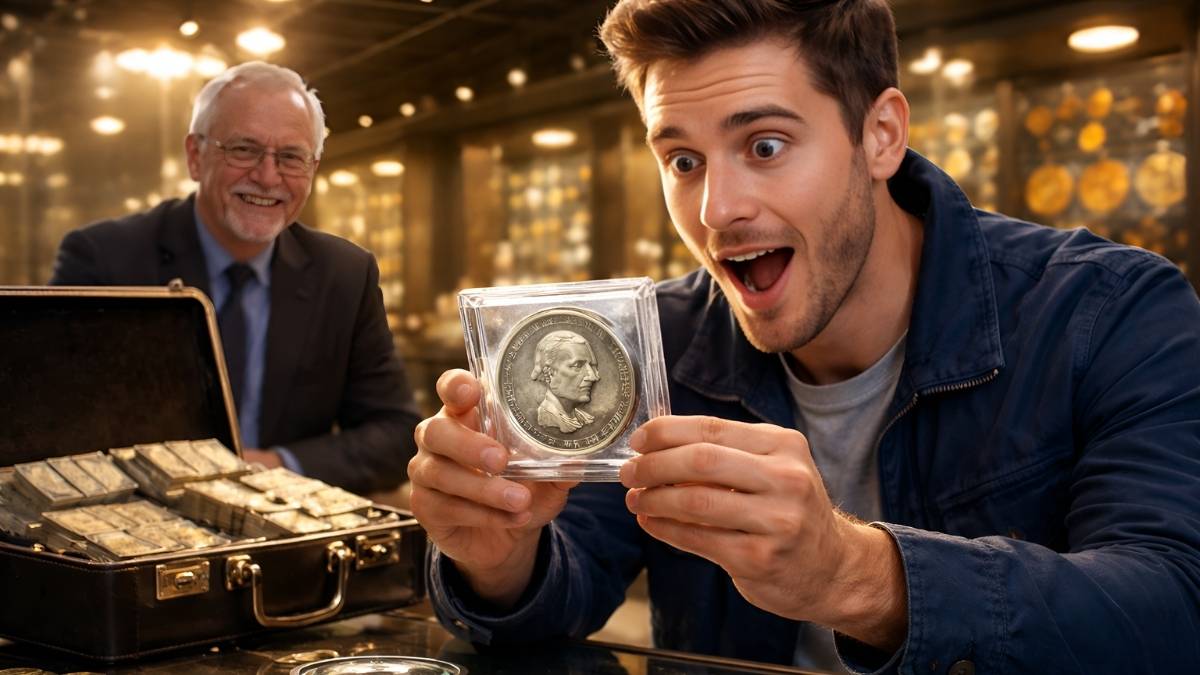
The $11M Kennedy Half Dollar: The Kennedy Half Dollar was first minted in 1964, just months after the tragic assassination of President John F. Kennedy. It was introduced as a tribute to the beloved leader, with his portrait on the obverse designed by Gilroy Roberts and the presidential seal on the reverse created by Frank Gasparro. The coin quickly became a symbol of national mourning and pride, and its release was met with overwhelming public demand. Millions of Americans sought to own a piece of history, and the Kennedy Half Dollar became one of the most collected coins in U.S. history.
Why Some Kennedy Half Dollars Are Worth Millions
Most Kennedy Half Dollars are worth only their face value or modest premiums to collectors, but certain rare issues have achieved extraordinary valuations. The difference lies in rarity, minting errors, and condition. Coins struck under unusual circumstances or preserved in pristine condition can command astronomical prices. The Kennedy Half Dollar valued at $11 million is one such example, representing a perfect storm of historical significance, scarcity, and collector demand.
The Story Behind the $11 Million Coin
The coin that has captured attention is a rare Kennedy Half Dollar struck in 1964 using a special proof finish and preserved in exceptional condition. During its first year of production, some coins were struck with unique characteristics, including sharper details and mirror-like surfaces. A handful of these coins were produced in extremely limited numbers, making them highly sought after by collectors. One such coin, authenticated and graded at the highest level, eventually sold for $11 million, cementing its place as one of the most valuable coins in American numismatics.
Minting Errors and Their Role in Value
Minting errors often play a significant role in elevating coin values. In the case of Kennedy Half Dollars, certain varieties such as double dies, off-center strikes, and wrong planchet errors have become prized possessions. These anomalies are rare and represent moments when human oversight or mechanical imperfections created something unique. Collectors treasure these coins not only for their rarity but also for the stories they tell about the minting process. The $11 million Kennedy Half Dollar stands as a testament to how rarity and perfection can combine to create extraordinary value.
Collector Fascination and Emotional Value
Coin collectors, also known as numismatists, are drawn to stories of rarity and discovery. The Kennedy Half Dollar has long been a favorite due to its connection to one of America’s most iconic presidents. Owning a rare example of this coin is not just about financial value; it is about possessing a piece of history that few others can claim. The emotional connection to President Kennedy, combined with the coin’s rarity, fuels the imagination of collectors worldwide. This emotional value often drives collectors to pay extraordinary sums for rare coins.
Auction Houses and Market Influence
The valuation of $11 million was achieved through competitive bidding at auction. Auction houses play a crucial role in determining the market value of rare coins, as they bring together wealthy collectors and investors willing to pay extraordinary sums for unique items. The bidding wars that erupt over coins like the Kennedy Half Dollar highlight the passion and prestige associated with numismatics. Each sale sets new benchmarks, influencing the market for years to come and reinforcing the perception of rarity as a driver of value.
Condition and Grading Standards
The condition of a coin is one of the most important factors in determining its worth. Coins are graded on a scale that ranges from poor to mint state, with higher grades commanding higher prices. The $11 million Kennedy Half Dollar was preserved in exceptional condition, which significantly contributed to its valuation. Even slight wear or damage can reduce a coin’s worth, making pristine examples of rare coins especially desirable. Professional grading services provide authentication and condition assessments, ensuring transparency in the market.
Everyday Change and Hidden Treasures
One of the most fascinating aspects of coin collecting is the possibility of finding treasures in everyday change. While the odds of discovering an $11 million Kennedy Half Dollar in circulation are virtually nonexistent, stories of valuable coins being found in pocket change continue to inspire collectors and casual enthusiasts alike. The idea that a humble coin in your pocket could be worth a fortune adds an element of excitement to the hobby. It reminds people that history and value can sometimes be hidden in plain sight.
Real Deal or Market Hype
The question remains whether the $11 million valuation represents genuine worth or market hype. On one hand, the rarity and historical significance of the Kennedy Half Dollar are undeniable, making it a legitimate treasure. On the other hand, valuations in numismatics can sometimes be influenced by market trends, collector enthusiasm, and media attention. While the coin is certainly valuable, its price may fluctuate depending on demand and the broader economic climate. For some, the valuation reflects a genuine appreciation of rarity, while others see it as an example of hype-driven bidding.
Cultural Impact of Rare Coin Discoveries
The sale of a Kennedy Half Dollar for $11 million captured public attention far beyond the coin-collecting community. It became a symbol of how something as ordinary as a coin could hold extraordinary value under the right circumstances. Stories of rare coins inspire curiosity and remind people that treasures can sometimes be found in the most unexpected places. The cultural fascination with this coin demonstrates how history, rarity, and human error can combine to create a phenomenon that resonates across generations.

Lessons for Collectors and Investors
The tale of the $11 million Kennedy Half Dollar offers important lessons for both collectors and investors. It demonstrates the importance of knowledge, patience, and attention to detail in numismatics. While most coins may never reach such astronomical values, understanding the factors that contribute to rarity can help collectors identify valuable pieces. For investors, rare coins represent an alternative asset class that combines historical significance with financial potential. However, caution is essential, as market hype can sometimes inflate values beyond sustainable levels.
The Future of Rare Coin Collecting
Rare coin collecting continues to thrive as new generations discover the excitement of numismatics. The Kennedy Half Dollar, especially the legendary 1964 proof version, will remain a cornerstone of this hobby. As technology advances, collectors have more tools to authenticate and grade coins, ensuring transparency in the market. The fascination with rare coins is unlikely to fade, as they embody the intersection of history, art, and economics. The $11 million coin will continue to inspire collectors to search for hidden treasures in their own pockets and collections.

Conclusion: A Coin That Became a Legend
The Kennedy Half Dollar worth $11 million is more than just a coin; it is a story of rarity, history, and human fascination. From its origins as a tribute to President John F. Kennedy to its transformation into one of the most valuable coins ever sold, it represents the enduring allure of numismatics. Its valuation sparked debate about whether such prices reflect genuine worth or market hype, but its significance in coin-collecting history is undeniable. For collectors and enthusiasts alike, the Kennedy Half Dollar will forever stand as a symbol of how a humble coin became a priceless treasure.