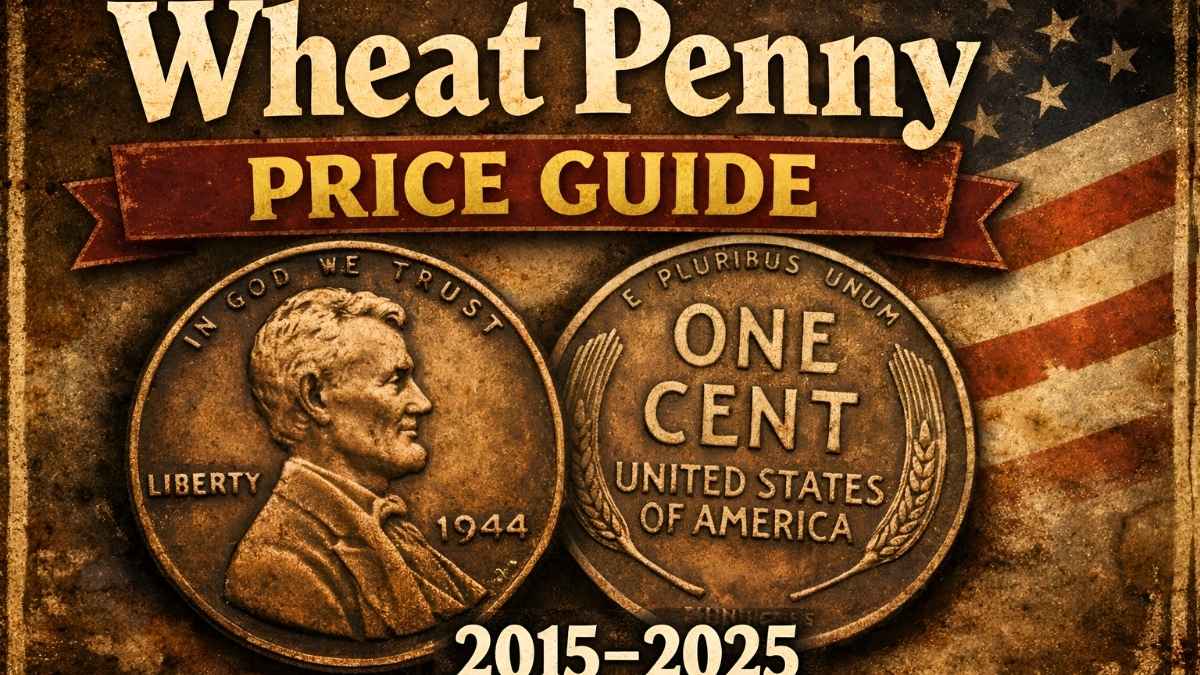
Wheat Penny Price Guide 2015–2025: The Lincoln Wheat Penny, minted from 1909 to 1958, remains one of the most beloved coins among collectors. Its reverse design featuring two wheat stalks gave it the nickname “Wheat Penny.” Even decades after production ended, these coins continue to attract interest due to their historical significance, rarity, and potential value. Between 2015 and 2025, the market for Wheat Pennies has shown notable trends, with certain rare dates and minting errors commanding high premiums.
Why Wheat Pennies Are Valuable
The value of a Wheat Penny depends on several factors including rarity, condition, and collector demand. Coins with low mintage numbers, unique varieties, or minting errors stand out from the millions produced. High-grade specimens certified by professional grading services can sell for hundreds or even thousands. For collectors, Wheat Pennies represent both historical artifacts and investment opportunities.
Market Trends 2015–2025
Over the past decade, Wheat Pennies have steadily appreciated in value. Auction records show strong demand for key dates such as the 1909-S VDB and the 1914-D. Error varieties like doubled dies and off-center strikes have also gained popularity. The rise of online marketplaces has made rare coins more accessible, increasing competition among buyers. Collectors have shown consistent interest in building complete sets, driving demand for both common and rare issues.
Key Dates and Their Values
Certain Wheat Pennies are especially famous among collectors:
- 1909-S VDB, the first year of issue with designer Victor David Brenner’s initials, remains one of the most sought-after coins.
- 1914-D, with low mintage, commands high prices in mint state condition.
- 1922 No D, a variety struck without the Denver mintmark, is rare and valuable.
- 1931-S, another low mintage coin, is prized by collectors.
- 1955 Doubled Die, with dramatic doubling in the date and lettering, is one of the most famous error coins.
Error Varieties That Add Value
Minting errors can transform ordinary Wheat Pennies into extraordinary finds. Common types of errors include doubled dies, off-center strikes, wrong planchet strikes, and clipped planchets. The 1955 doubled die is the most famous, but other varieties such as the 1944 steel planchet error also command high premiums. These coins are visually distinctive and often sell for significant sums.
Condition and Grading
Condition plays a crucial role in determining the value of Wheat Pennies. Coins are graded on a scale from circulated to mint state, with higher grades commanding higher prices. Professional grading services such as PCGS and NGC authenticate coins and assign grades, providing assurance to buyers and sellers. A rare error coin in mint condition can be worth significantly more than the same coin in circulated condition.
Collector Insights from 2015–2025
Collectors over the past decade have emphasized the importance of patience and knowledge. Building a complete set of Wheat Pennies requires careful searching and awareness of key dates. Many collectors recommend examining bank rolls, estate sales, and inherited collections for hidden treasures. The popularity of coin shows and online auctions has provided opportunities to acquire rare varieties.
Investment Potential of Wheat Pennies
Rare Wheat Pennies offer investment potential due to their scarcity and demand among collectors. While not every penny is worth a fortune, certain varieties have consistently appreciated in value. Investors view rare coins as tangible assets that can diversify portfolios and provide long-term returns. Auction records from 2015 to 2025 show strong demand for high-grade key dates and dramatic error varieties.
Cultural and Historical Significance
Beyond monetary value, Wheat Pennies carry cultural and historical significance. They commemorate Abraham Lincoln’s legacy and symbolize America’s history during the early 20th century. Collectors cherish these coins not only for their rarity but also for the stories they tell about American history. Each coin is a piece of art and a reflection of its era.
How to Spot Valuable Wheat Pennies
Collectors can identify valuable Wheat Pennies by carefully examining coins for unusual features. Key indicators include rare dates, mintmarks, doubled designs, and off-center strikes. Using a magnifying glass or coin loupe helps spot these anomalies. Knowledge of known varieties is essential, as it allows collectors to recognize valuable coins quickly.
Conclusion Wheat Pennies Worth Collecting
The Wheat Penny series may seem ordinary at first glance, but rare dates and minting errors transform these coins into treasures worth far more than one cent. From the 1909-S VDB to the 1955 doubled die, collectors continue to seek out these elusive pieces between 2015 and 2025. For enthusiasts and investors alike, Wheat Pennies represent both historical artifacts and opportunities for financial gain. Spotting rare coins in your change or collection is not just a hobby, it is a chance to uncover pieces of American history that hold extraordinary value.