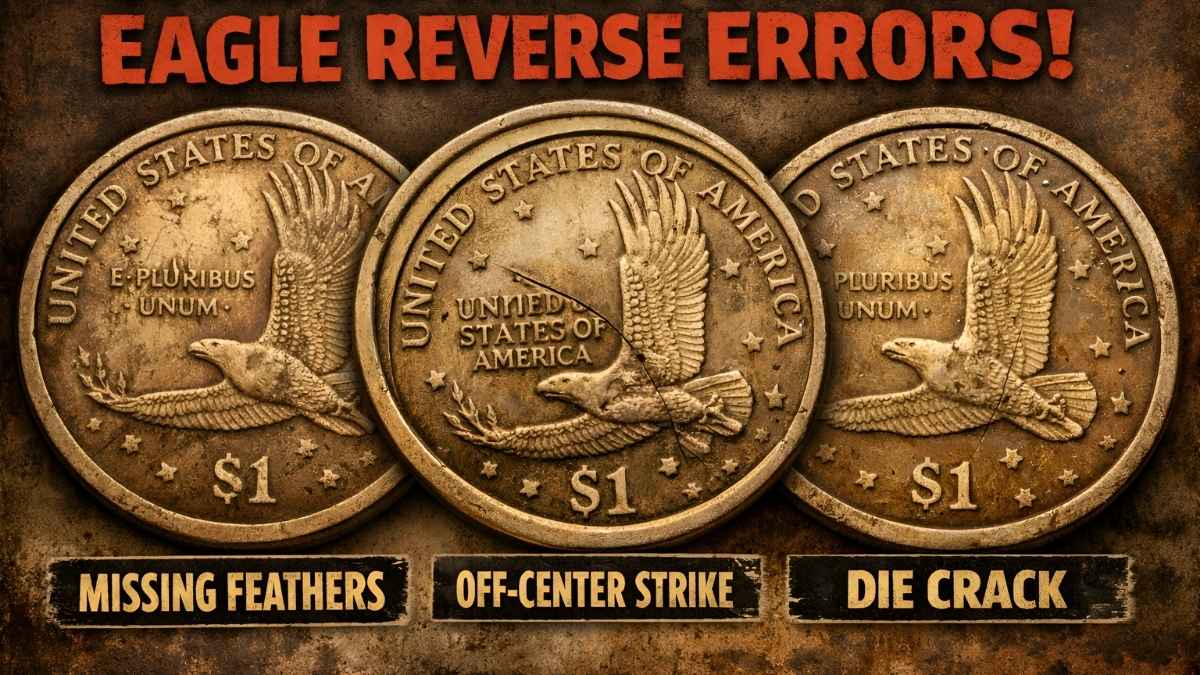
Sacagawea Dollar Eagle Reverse Errors: The Sacagawea Dollar was first introduced in 2000 as a tribute to Sacagawea, the Shoshone woman who guided the Lewis and Clark expedition. The coin was designed to honor her courage and contributions, with the obverse showing Sacagawea carrying her infant son Jean Baptiste. The reverse originally featured a soaring eagle, symbolizing freedom and strength. Its golden color and smooth edge distinguished it from other denominations, though it struggled to gain widespread use in everyday transactions.
Why Reverse Errors Matter
In coin collecting, errors are often more valuable than standard issues. Reverse errors occur when mistakes are made in the design, engraving, or striking process. For the Sacagawea Dollar, eagle reverse errors are particularly significant because they are rare and visually distinctive. These mistakes can include doubled images, misaligned strikes, or unusual die variations. Collectors prize such coins because they represent unique moments in minting history.
Types of Eagle Reverse Errors
Several types of eagle reverse errors have been documented on Sacagawea Dollars. Some coins show doubling in the feathers or wings, while others display misaligned images that make the eagle appear distorted. There are also examples where parts of the design are missing or faint due to weak strikes. Each error adds uniqueness, and the rarity of these mistakes drives their value higher.
The Market Value of Error Coins
Error coins often sell for far more than their face value. While a standard Sacagawea Dollar is worth one dollar, eagle reverse error coins can be valued at hundreds or even thousands depending on rarity and condition. In some cases, collectors have paid tens of thousands for particularly striking examples. The market value depends on demand, visibility of the error, and the overall preservation of the coin.
How to Identify an Error Coin
Identifying an eagle reverse error requires careful observation. Collectors often use magnifying glasses to examine details of the wings, feathers, and lettering. Doubling, missing elements, or unusual textures are signs of an error. Comparing the coin to standard examples can help confirm differences. Beginners should take time to study reference materials and consult experienced collectors to avoid confusion with ordinary wear.
Everyday Change as a Source of Treasure
One of the most exciting aspects of coin collecting is the possibility of finding valuable coins in everyday change. While rare, eagle reverse errors on Sacagawea Dollars could still appear in circulation. Many people overlook coins, assuming they are of little value. Yet coin jars, piggy banks, and old family collections often contain hidden treasures. Taking a moment to examine coins carefully can reveal surprises that might otherwise go unnoticed.
The Role of Auctions and Collectors
Auctions play a vital role in determining the value of error coins. Collectors often compete fiercely for rare Sacagawea Dollar errors, driving prices upward. Auction records provide benchmarks for market value and highlight the demand for unique coins. Collectors value these coins not only for their rarity but also for the stories they tell about minting history and human error.
Misconceptions About Error Coins
It is important to note that not every unusual-looking coin is a valuable error. Many coins show signs of wear, damage, or environmental effects that can mimic errors. True minting errors are rare and must be carefully verified. Beginners should avoid assuming that every odd coin is worth thousands. Knowledge and patience are essential to distinguish genuine errors from ordinary imperfections.
Tips for Beginners in Coin Collecting
For those interested in exploring coin collecting, start by learning to identify common errors and studying examples of rare coins. Use magnifying tools, research mint marks, and compare coins with reliable references. Beginners should focus on building knowledge rather than expecting instant wealth. Over time, the practice of examining coins becomes both educational and rewarding.
The Broader Significance of Error Coins
Error coins like the Sacagawea Dollar eagle reverse mistakes are more than financial assets. They are pieces of history that reflect the complexity of minting and the human element behind coin production. Each error tells a story of oversight, chance, and uniqueness. Collectors value them not only for their rarity but also for their ability to connect us to the process of creating currency.
Conclusion: What They’re Really Worth
Sacagawea Dollar eagle reverse errors remind us that even small mistakes can create extraordinary value. While most coins are ordinary, rare errors highlight the importance of paying attention to details. For collectors and beginners alike, the lesson is clear: treasures can be found in the smallest objects. These coins are worth far more than their face value, both in monetary terms and in the stories they carry. The possibility that such coins remain in circulation today adds excitement to everyday life, proving that history and value can be discovered in unexpected places.