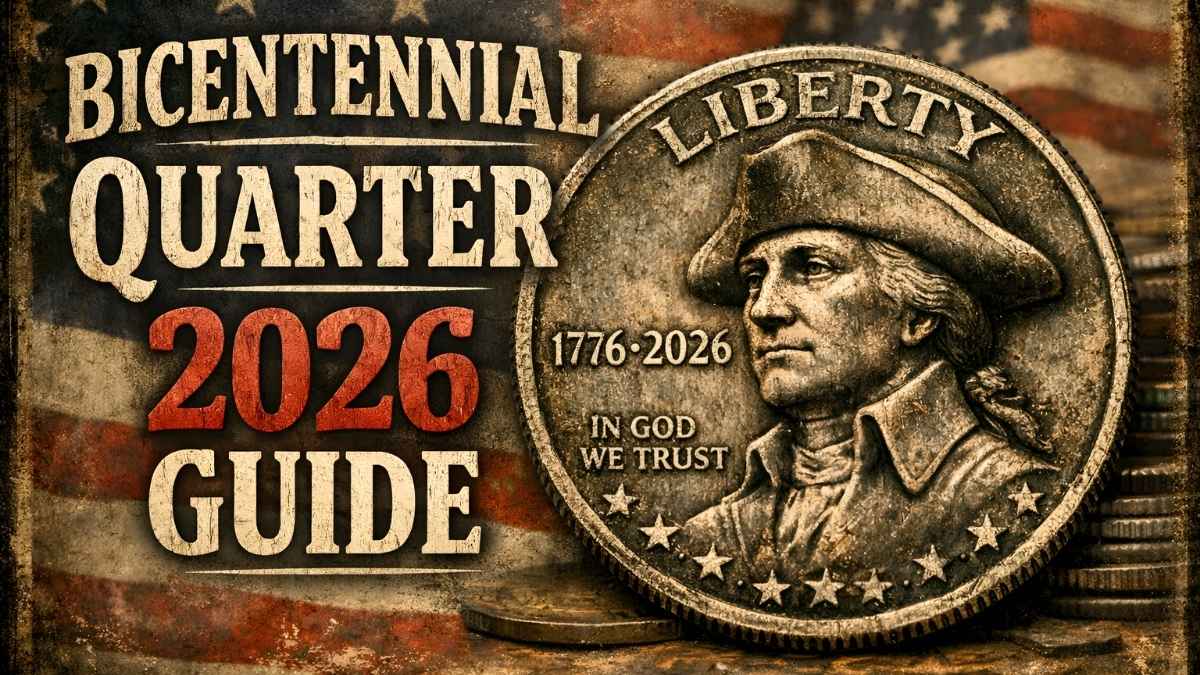
Bicentennial Quarter 2026 Guide: The Bicentennial quarter was first issued in 1975 and 1976 to celebrate the 200th anniversary of American independence. Unlike regular Washington quarters, this commemorative coin carried the dual date “1776–1976” and featured a special reverse design. The obverse retained George Washington’s portrait, while the reverse displayed a colonial drummer and a torch surrounded by thirteen stars, representing the original colonies. This patriotic design made the coin instantly recognizable and a favorite among collectors.
Design Features That Make It Unique
The reverse design by Jack L. Ahr is one of the most iconic in U.S. coinage. The colonial drummer symbolizes the Revolutionary spirit, while the torch and stars emphasize unity and freedom. The coin was minted in both copper-nickel clad and 40 percent silver versions, with the silver issues available in collector sets. These design elements, combined with historical significance, ensure that the Bicentennial quarter remains a standout piece in American numismatics.
Mint Marks and Production Facilities
The Bicentennial quarter was produced at several U.S. Mint facilities:
- Philadelphia (no mint mark)
- Denver (D)
- San Francisco (S, proof and silver issues)
Mint marks are critical for collectors because they indicate where the coin was produced. Proof and silver coins from San Francisco are especially desirable, while circulation strikes from Philadelphia and Denver are more common but still collectible.
Mintage Numbers and Rarity
Hundreds of millions of Bicentennial quarters were struck, making most examples common today. However, certain varieties, such as silver proofs and coins with minting errors, are far rarer. These rarities drive collector demand and higher values in the marketplace. By 2026, the coin’s age and historical significance add another layer of appeal, especially for those seeking pristine examples.
Value of Circulated Coins
Most circulated Bicentennial quarters are worth their face value of twenty-five cents. Coins with minimal wear and strong details may attract modest premiums, especially for collectors seeking to complete year sets. While common in circulation, they hold historical importance that makes them worth preserving.
Value of Uncirculated and Proof Coins
Uncirculated Bicentennial quarters, often obtained from mint sets, can range in value from $1 to $5 depending on condition. Proof coins, particularly silver proofs, are more valuable, often selling for $5 to $15 or more. Their superior strike quality and mirror-like finish make them standout pieces in any collection. Silver issues, due to their limited mintage, can command even higher prices, sometimes reaching into the hundreds for exceptional specimens.
Error Coins and Their Premiums
Error coins from the Bicentennial series are rare but highly sought after. Examples include doubled dies, off-center strikes, and misaligned mint marks. These errors can significantly increase a coin’s value, sometimes reaching hundreds of dollars depending on rarity and visibility. Error coins add excitement and unpredictability to collecting, making them prized finds.

Condition and Grading Standards
Grading plays a crucial role in determining the value of Bicentennial quarters. The scale ranges from Poor (P-1) to Mint State (MS-70). For these coins:
- Circulated examples typically grade between G-4 and VF-20
- Uncirculated coins may grade MS-60 to MS-65
- Exceptional specimens can reach MS-67 or higher, commanding premium prices
Professional grading services provide certification that enhances credibility and marketability, especially for coins with potential high value.
Collector Demand and Market Trends in 2026
The Bicentennial quarter remains one of the most popular commemorative coins among collectors. Its widespread distribution makes it accessible to beginners, while silver and proof versions appeal to advanced numismatists. Market demand in 2026 is steady, with values influenced by condition, rarity, and historical significance. Collectors often seek complete Bicentennial sets, including the quarter, half dollar, and dollar, to capture the spirit of 1976.
Building a Collection Around Bicentennial Coins
For many collectors, the Bicentennial quarter is a gateway into numismatics. It is affordable, historically significant, and visually distinctive. Building a collection around Bicentennial coins allows enthusiasts to explore different mint marks, finishes, and error varieties. The 1976 quarter serves as both a standalone collectible and a key piece in broader U.S. coinage collections.
Conclusion: Values from 25¢ to $500+
The 1776–1976 Bicentennial quarter is more than just a coin in circulation. It is a symbol of American pride and history, commemorating two centuries of independence. While most examples are worth only modest amounts, rare varieties and exceptional specimens can command significant premiums, sometimes reaching $500 or more. Whether collected for its design, historical significance, or investment potential, the Bicentennial quarter remains a cherished piece of numismatic heritage that continues to inspire collectors in 2026 and beyond.