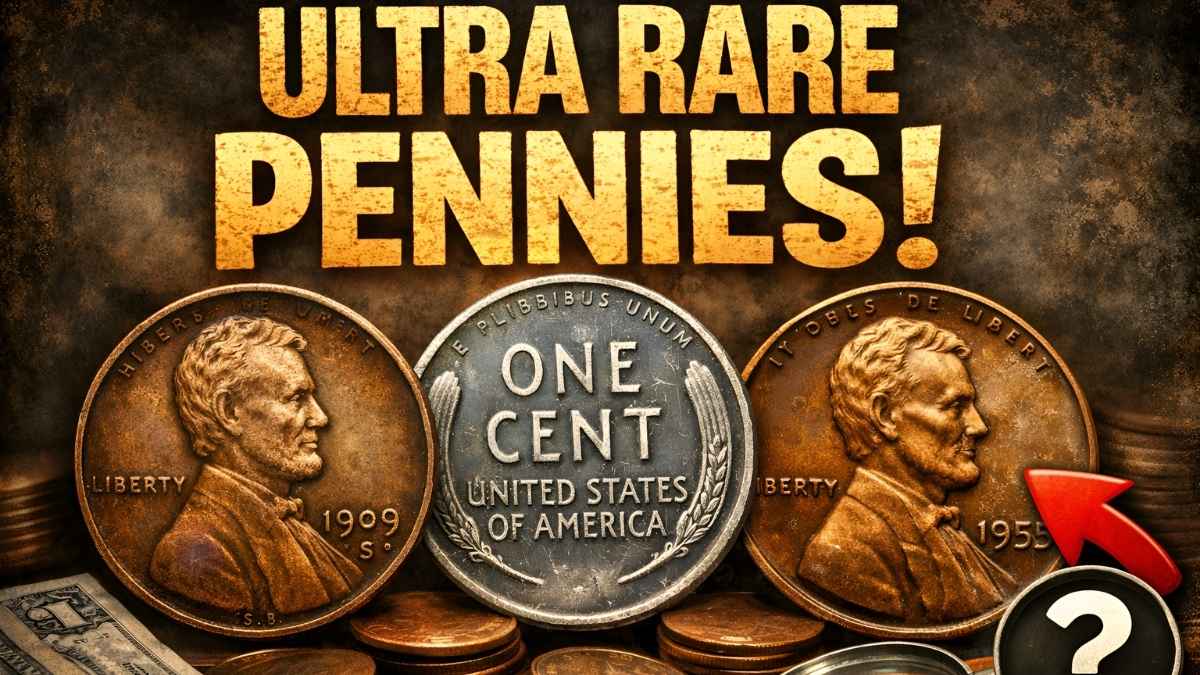
Ultra Rare Pennies 2026: The Lincoln penny was first introduced in 1909 to commemorate the centennial of Abraham Lincoln’s birth. Designed by Victor David Brenner, the coin became the first U.S. cent to feature a real person rather than a symbolic figure. Over the decades, the Lincoln penny has undergone design changes, from the Wheat reverse to the Memorial and later the Union Shield. Despite being a low-denomination coin, it remains one of the most collected series in American numismatics.
Why certain pennies are ultra rare
Most pennies are common and worth only face value, but specific dates, mint marks, and varieties can make them ultra rare and extremely valuable. Coins with low mintages, minting errors, or unique historical significance are the ones that command high prices. In 2026, some of these rare pennies continue to sell for thousands or even millions of dollars at auctions, making them prized possessions for collectors.
Mint marks and their importance
Mint marks are small letters on coins that indicate where they were produced. For Lincoln pennies, the most common mint marks are:
- P for Philadelphia (often omitted on older coins).
- D for Denver.
- S for San Francisco.
These marks can dramatically affect a coin’s value. For example, a 1909-S VDB penny is one of the most famous rarities, while a common 1970-D penny may hold only nominal collector value unless in pristine condition.
Value ranges by era
Lincoln pennies can be grouped into distinct eras, each with its own value trends:
- 1909–1958 (Wheat pennies): These coins feature wheat stalks on the reverse. Common dates may be worth a few cents to a few dollars, while rarities like the 1909-S VDB or 1914-D can fetch hundreds or even thousands.
- 1959–1982 (Memorial pennies): Featuring the Lincoln Memorial, these coins are generally less valuable, though certain varieties, such as the 1972 doubled die, can be worth hundreds.
- 1982–2008 (Copper and zinc transition): In 1982, the composition shifted from mostly copper to zinc with a copper coating. Copper pennies are more desirable, and collectors often separate them from zinc issues.
- 2009 (Lincoln bicentennial series): Special designs were issued to celebrate Lincoln’s 200th birthday, and uncirculated sets hold collector interest.
- 2010–present (Union shield design): Modern pennies typically hold face value unless in proof or special mint sets, though rare errors can increase value.
Ultra rare and valuable examples
Some Lincoln pennies stand out as legendary among collectors:
- 1909-S VDB: One of the most famous rarities, valued in the thousands depending on condition.
- 1914-D: A key date penny that commands high prices in Mint State grades.
- 1922 “No D”: A Denver mint penny mistakenly struck without a mint mark, highly prized.
- 1943 copper penny: An accidental issue during World War II, worth millions in top condition.
- 1955 doubled die: Famous for its dramatic doubling on the date and lettering, worth tens of thousands.
The role of condition and grading
Condition is one of the most important factors in determining value. Coins graded as Mint State (MS) or Proof are worth significantly more than circulated examples. Professional grading services provide authentication and assign numerical grades, which help collectors and investors establish fair market value. A rare penny in MS-65 or higher can be worth exponentially more than the same coin in lower grades.
Price trends in 2026
In 2026, ultra rare pennies continue to show strong demand among collectors. While common copper issues remain inexpensive, rare varieties and error coins have seen price increases. Auction results show that coins like the 1909-S VDB and 1955 doubled die are particularly strong, with some examples selling for tens of thousands. The legendary 1943 copper penny remains one of the most valuable coins in American numismatics, with prices reaching millions.
Collector insights and strategies
For collectors, Lincoln pennies offer both affordable entry points and rare treasures. Beginners often start by assembling a complete set of Wheat pennies, while advanced collectors focus on rarities, error coins, or high-grade examples. Attending coin shows, participating in online auctions, and consulting price guides are effective ways to stay informed about market trends. Many collectors also invest in professional grading to protect and enhance the value of their coins.
Preservation and storage
Proper storage is essential to maintain the value of Lincoln pennies. Coins should be kept in protective holders or albums, away from moisture and direct sunlight. Handling should be minimized, and when necessary, coins should be touched only by the edges to avoid fingerprints. Professional grading and encapsulation can provide long-term protection and enhance resale value.

Conclusion: a small coin with immense history
The ultra rare penny value guide of 2026 highlights the enduring appeal of this coin series. From the iconic 1909-S VDB to the legendary 1943 copper penny worth millions, each coin tells a story of American history and minting artistry. For collectors, Lincoln pennies offer both affordable opportunities and rare treasures that can transform a collection. As numismatics continues to evolve, the Lincoln penny remains a symbol of tradition, rarity, and lasting fascination.