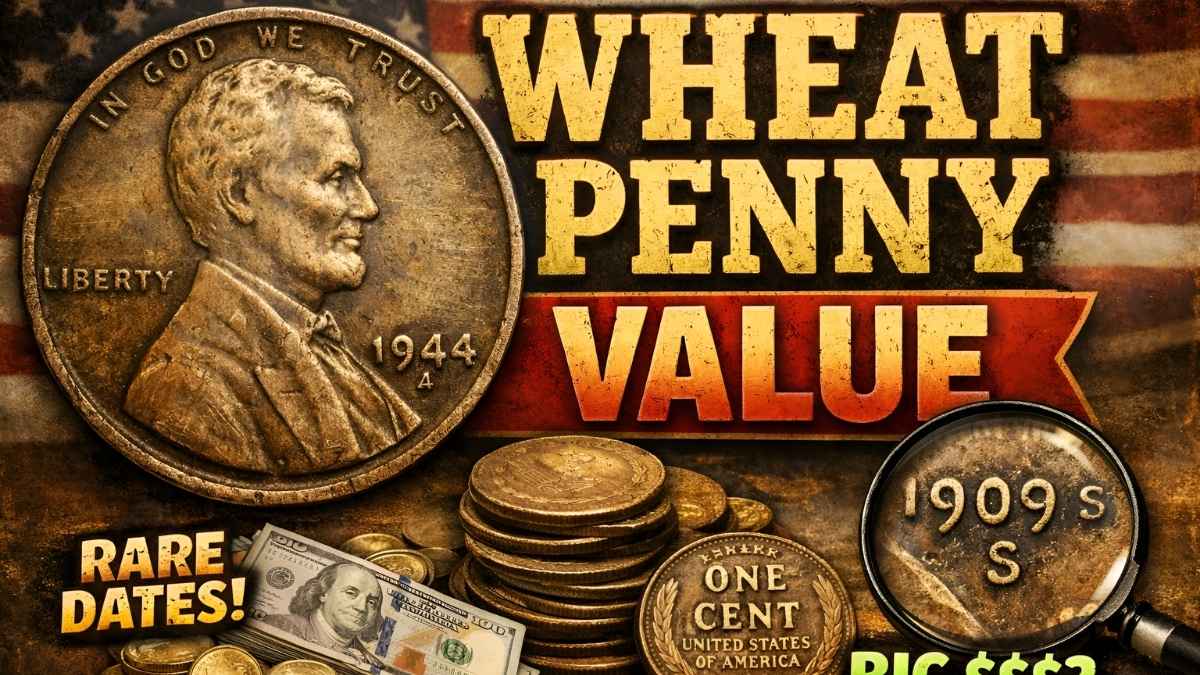
Wheat Penny Value 2026: The Lincoln Wheat Penny, minted from 1909 to 1958, is one of the most iconic coins in American numismatics. Its reverse design featuring two wheat stalks gave it the nickname “Wheat Penny.” For decades, collectors have sought these coins not only for their historical significance but also for the possibility of uncovering rare varieties worth astonishing sums. In 2026, the fascination with Wheat Pennies remains strong, with prices reflecting both rarity and condition.
Common Wheat Pennies and Their Value
Most Wheat Pennies are relatively common and trade for modest premiums above face value. Circulated examples from the 1940s and 1950s often sell for 5 to 20 cents each, while uncirculated coins can bring in a few dollars. The real excitement lies in earlier dates and rare mint marks, which can command significantly higher prices.
Key Dates That Collectors Seek
Certain Wheat Pennies are considered “key dates” because of their rarity. These include:
- 1909-S VDB, one of the most famous and valuable Lincoln Cents.
- 1914-D, a scarce issue from the Denver Mint.
- 1922 No D, a variety missing the Denver mint mark.
- 1931-S, a low mintage coin that remains highly sought after.
- 1955 Double Die Obverse, one of the most famous error coins in American history.
Owning one of these coins in high grade can dramatically increase the value of a collection.
Error Coins Worth Big Money
Error coins are among the most exciting finds for collectors. Some of the most valuable Wheat Penny errors include:
- Double die obverse, where the date and lettering appear doubled.
- Off-center strikes, creating a visually unusual coin.
- Coins struck on the wrong planchet, such as a dime or foreign blank.
- Repunched mint marks, where the mint mark was applied more than once.
These errors are rare, and their scarcity drives values into the hundreds or even thousands of dollars depending on condition.

Collector Secrets for 2026
Experienced collectors know that success often comes from careful searching and patience. Some strategies include:
- Searching rolls of pennies from banks, where older coins occasionally appear.
- Examining inherited collections, which may contain overlooked rarities.
- Attending coin shows and auctions to learn from experts and spot valuable pieces.
- Using magnification to check for subtle errors that can dramatically increase value.
The Importance of Coin Grading
Professional grading is essential for determining the true value of Wheat Pennies. Coins are graded on a scale from Poor (P-1) to Mint State (MS-70). A rare coin in mint state condition can be worth exponentially more than the same coin in circulated condition. Collectors often send their coins to grading services to ensure authenticity and maximize resale value.
Market Trends in 2026
The coin market in 2026 shows strong demand for classic American coins, including Wheat Pennies. Online auctions and collector forums have made it easier than ever to buy and sell coins, increasing competition and driving up prices for rare varieties. Error coins and key dates continue to set record prices, while common coins remain affordable for beginners.
Risks and Challenges for Collectors
While collecting Wheat Pennies can be rewarding, there are risks to consider:
- Counterfeit coins exist, especially for key dates like the 1909-S VDB.
- Market values fluctuate, and not all coins maintain their peak prices.
- Inexperienced collectors may overpay without proper research.
- Storage and preservation are critical, as improper handling can reduce value.
Conclusion
Wheat Pennies remain one of the most beloved and accessible coins for collectors in 2026. From common pieces worth a few cents to rare varieties and error coins valued in the thousands, they offer opportunities for both beginners and seasoned numismatists. The discovery of a rare coin can transform a simple collection into a valuable treasure, proving that even the smallest coins can hold big money potential.