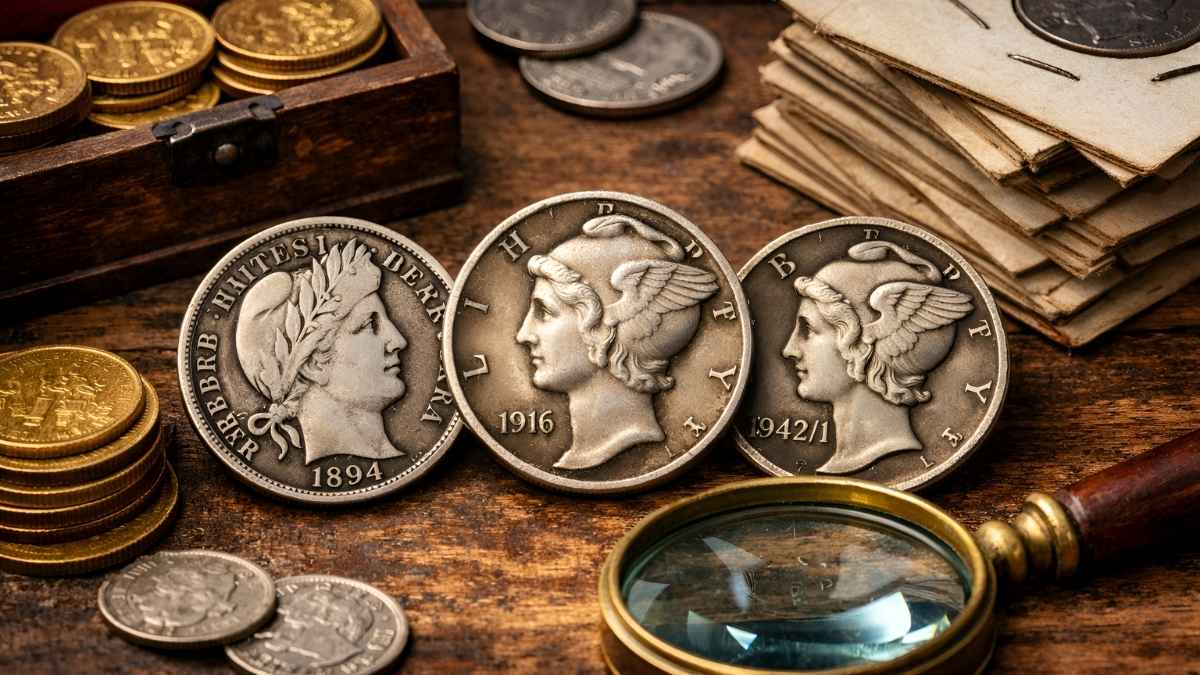
Rare Dimes Worth a Fortune: Dimes have long been a fascinating part of American coinage, offering collectors both historical significance and the thrill of discovering rare varieties. While most dimes are worth only their face value, certain issues have become legendary for their scarcity, condition, or unique minting errors. These rare dimes can be worth a fortune, commanding thousands or even hundreds of thousands of dollars at auctions. In 2026, the collector’s market for rare dimes remains strong, with enthusiasts eager to acquire these treasures. This guide provides a complete overview of the most valuable dimes, their history, and the factors that influence their worth.
Historical Background of the Dime
The dime was first introduced in 1796 as part of the early U.S. coinage system. Over the centuries, it has seen several design changes, from the Draped Bust and Seated Liberty to the Barber, Mercury, and Roosevelt dimes. Each design reflects the era in which it was minted, offering collectors a glimpse into American history. Rare dimes often come from periods of low mintage, transitional designs, or minting errors, making them highly desirable.
The 1894-S Barber Dime
One of the most famous rare dimes is the 1894-S Barber Dime. With only 24 originally minted and fewer than 10 known to exist today, it is considered a true numismatic treasure. Collectors prize this coin for its extreme rarity and the mystery surrounding its limited production. In 2026, auction prices for the 1894-S Barber Dime continue to reach hundreds of thousands of dollars, making it one of the most valuable coins in American history.
The 1916-D Mercury Dime
The 1916-D Mercury Dime is another legendary rarity. With a low mintage of just over 260,000, it is the key date in the Mercury dime series. Collectors seek high-grade examples, which can command tens of thousands of dollars. In 2026, the 1916-D remains a cornerstone of any serious dime collection, representing both scarcity and the artistry of the Mercury design.
The 1942/41 Overdate Mercury Dime
Error coins often achieve extraordinary values, and the 1942/41 overdate Mercury Dime is a prime example. This coin was created when a 1941 die was mistakenly overpunched with a 1942 date, resulting in a distinctive error. Collectors prize this variety for its rarity and uniqueness, with values in 2026 reaching several thousand dollars for high-grade specimens.
The 1968 No-S Proof Roosevelt Dime
Modern rarities also play a role in the world of valuable dimes. The 1968 No-S Proof Roosevelt Dime was mistakenly struck without the San Francisco mint mark, making it extremely rare. Only a handful exist, and in 2026, this coin continues to command values in the tens of thousands. It represents the importance of minting precision and the excitement of discovering modern errors.

The 1975 No-S Proof Roosevelt Dime
Similar to the 1968 variety, the 1975 No-S Proof Roosevelt Dime was struck without a mint mark. Extremely rare, it remains one of the most valuable modern dimes. Collectors in 2026 pay significant premiums for this coin, with auction prices consistently reaching impressive levels. Its rarity ensures its place among the most sought-after Roosevelt dimes.
The 1982 No-Mint Mark Roosevelt Dime
In 1982, a small number of dimes were struck at the Philadelphia Mint without the “P” mint mark. These coins entered circulation, making them accessible to the public. Today, they are highly collectible, with values ranging from hundreds to thousands depending on condition. In 2026, the 1982 no-mint mark dime remains a popular rarity among collectors, offering both affordability and historical intrigue.

Collector’s Value Chart for Rare Dimes in 2026
The following chart provides a general overview of values for rare dimes in 2026:
- 1894-S Barber Dime: $500,000 to $2,000,000 depending on grade
- 1916-D Mercury Dime: $1,000 to $25,000 depending on grade
- 1942/41 Overdate Mercury Dime: $2,000 to $15,000 depending on grade
- 1968 No-S Proof Roosevelt Dime: $15,000 to $30,000 depending on grade
- 1975 No-S Proof Roosevelt Dime: $20,000 to $40,000 depending on grade
- 1982 No-Mint Mark Roosevelt Dime: $200 to $2,000 depending on grade
These values reflect general market trends in 2026 and can fluctuate based on collector demand and auction results.

Factors Influencing Value
Several factors determine the value of rare dimes. Rarity is the most important, with coins that exist in limited numbers commanding higher prices. Condition also plays a critical role, as coins graded in mint state or proof condition are worth far more than circulated examples. Historical significance and collector demand further influence pricing, with certain varieties achieving legendary status in numismatic circles.
Collecting Strategies for Rare Dimes
Collectors interested in rare dimes should focus on acquiring coins in the best possible condition. Proof sets from the San Francisco Mint are an excellent starting point, as they often contain high-quality examples. Searching through rolls of dimes from banks can occasionally yield rare varieties, though patience and a keen eye are required. Attending coin shows and auctions provides opportunities to acquire rare error coins and mint mark variations.

Authentication and Grading
Authentication and grading are essential when dealing with rare dimes. Professional grading services evaluate coins based on strike quality, surface preservation, and overall eye appeal. Coins graded at higher levels, such as MS-67 or PR-70, command significant premiums. Collectors should always verify authenticity, especially when purchasing rare varieties, to avoid counterfeits or altered coins.
Investment Potential of Rare Dimes
Beyond their historical and cultural significance, rare dimes represent a unique investment opportunity. As tangible assets, they offer diversification for collectors and investors. While the market can fluctuate, rare coins have historically appreciated in value over time. In 2026, demand for error coins and proof varieties remains strong, suggesting continued growth in value for well-preserved examples.

Auction Trends and Market Activity
Auctions play a major role in determining the value of rare dimes. High-profile sales often set benchmarks for pricing, with rare varieties achieving record-breaking results. Private sales also contribute to market activity, with collectors willing to pay premiums for unique examples. The combination of public auctions and private transactions ensures a dynamic market where values continue to evolve.
Preservation and Storage
Proper preservation is critical for maintaining the value of rare dimes. Coins should be stored in protective holders to prevent scratches, tarnish, or environmental damage. Avoid handling coins with bare hands, as oils and dirt can affect surfaces. Climate-controlled storage is recommended for long-term preservation, ensuring that coins retain their original luster and condition.
Conclusion
Rare dimes offer collectors both historical significance and investment potential. From the legendary 1894-S Barber Dime to modern rarities like the 1968 No-S Proof, these coins represent treasures worth a fortune. Understanding the collector’s chart, factors influencing pricing, and strategies for collecting ensures that enthusiasts can make informed decisions. As auctions and private sales continue to highlight the allure of these coins, rare dimes in 2026 stand as must-have treasures for serious collectors and investors alike.