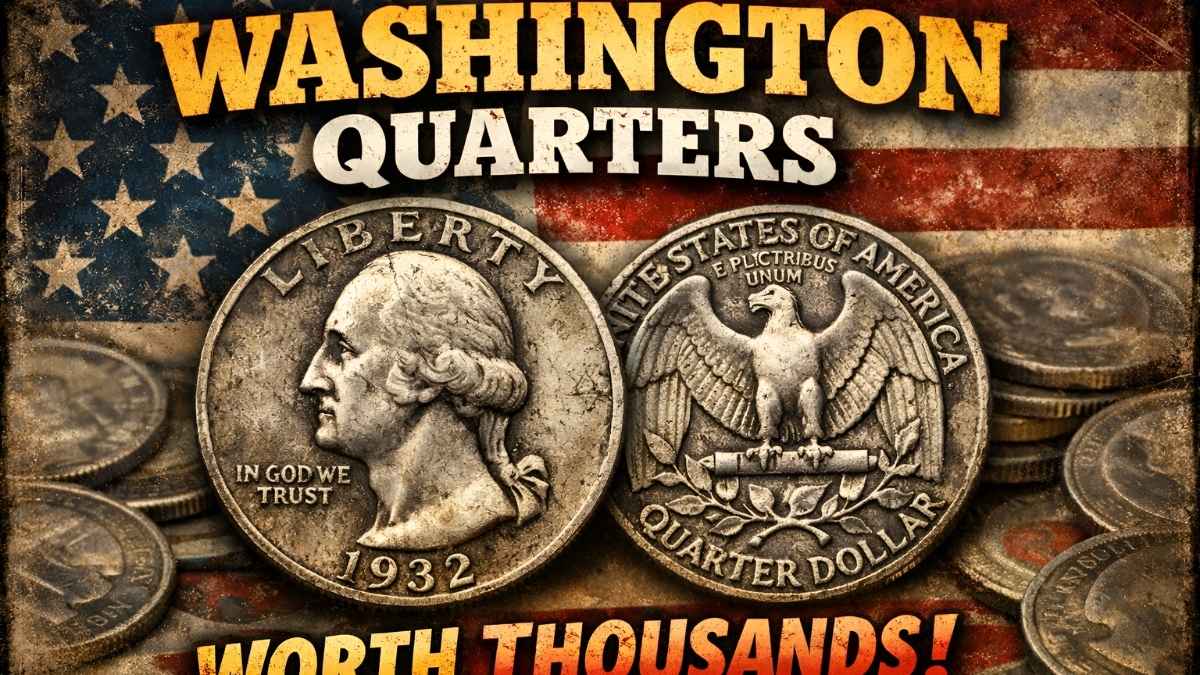
Washington Quarters Worth Thousands: The Washington quarter was first introduced in 1932 to commemorate the 200th anniversary of George Washington’s birth. Initially intended as a one-year commemorative coin, it became a permanent fixture in U.S. coinage. Over the decades, the design has shifted from the original eagle reverse to the State Quarters program, the America the Beautiful series, and most recently the American Women quarters. Despite these changes, the coin remains a staple in circulation and a cornerstone of American numismatics.
Why certain quarters are worth thousands
Not all Washington quarters carry significant value, but specific dates, mint marks, and varieties can be worth thousands of dollars. Rarity is the key factor. Coins with low mintage numbers, unusual errors, or exceptional condition are highly sought after. For example, the 1932-D and 1932-S quarters are considered key dates because of their limited production, and in Mint State condition they can command prices well into the thousands.
Mint marks and their importance
Mint marks indicate where a coin was produced, and they play a crucial role in determining rarity. Washington quarters have been struck at several mints:
- P for Philadelphia.
- D for Denver.
- S for San Francisco.
- W for West Point, used in special releases.
Collectors pay close attention to these marks, as they can dramatically affect value. A 1932-D quarter is far rarer than its Philadelphia counterpart, making it a prized piece in any collection.
Value ranges by era
Washington quarters can be divided into distinct eras, each with unique collector interest:
- 1932–1964 (Silver quarters): Composed of 90% silver, these coins are valuable both for their metal content and historical significance. Common dates may be worth $5–$20, but rarities like the 1932-D and 1932-S can reach thousands in Mint State condition.
- 1965–1998 (Clad quarters): Made of copper-nickel, most are worth face value, but certain errors, such as off-metal strikes or doubled dies, can be worth hundreds or more.
- 1999–2008 (State quarters): Issued to honor each U.S. state, most are common, but rare minting errors, such as the Wisconsin quarter with an extra leaf, can fetch hundreds.
- 2010–2021 (America the Beautiful quarters): Featuring national parks and landmarks, these coins are popular among collectors, with certain low-mintage issues gaining value.
- 2022–present (American Women quarters): A newer series highlighting influential women in U.S. history, with Proof and special mint sets already attracting collector interest.
Rare and valuable examples
Some Washington quarters stand out as legendary among collectors:
- 1932-D and 1932-S: Key date coins with low mintages, often worth thousands in Mint State.
- 1943 doubled die obverse: A rare variety with noticeable doubling on the date and lettering.
- 1970-S Proof struck on silver planchet: An error coin valued in the thousands.
- 2004-D Wisconsin quarter with extra leaf: A modern rarity that can sell for hundreds or more.
- 2019-W quarters: Specially struck at West Point and released into circulation, these coins are highly collectible and can be worth hundreds depending on condition.
The role of condition and grading
Condition is one of the most important factors in determining value. Coins graded as Mint State (MS) or Proof are worth significantly more than circulated examples. Professional grading services provide authentication and assign numerical grades, which help collectors and investors establish fair market value. A rare coin in MS-65 or higher can be worth exponentially more than the same coin in lower grades.
Collector interest in 2026
In 2026, Washington quarters continue to attract both seasoned numismatists and new hobbyists. Online marketplaces, coin shows, and auctions provide platforms for trading, while grading services ensure authenticity. The rise of digital resources has made it easier for collectors to track values, compare conditions, and identify varieties. Despite being a common denomination, certain Washington quarters remain highly valuable and sought after.
How to start collecting
For beginners, collecting Washington quarters can be both affordable and rewarding. Many start by assembling a complete set of state quarters or by searching pocket change for silver issues dated before 1965. Coin albums and folders provide a structured way to organize collections, while attending coin shows offers opportunities to learn from experienced collectors. Over time, collectors may focus on rarities, error coins, or high-grade examples.
Preservation and storage
Proper storage is essential to maintain the value of Washington quarters. Coins should be kept in protective holders or albums, away from moisture and direct sunlight. Handling should be minimized, and when necessary, coins should be touched only by the edges to avoid fingerprints. Professional grading and encapsulation can provide long-term protection and enhance resale value.
Conclusion: a timeless collectible
The Washington quarter value guide of 2026 highlights the enduring appeal of this coin series. From the rare 1932-D and 1932-S silver quarters to modern error coins and special releases, each piece tells a story of American history and minting artistry. For collectors, Washington quarters offer both affordable entry points and rare treasures worth thousands. As numismatics continues to evolve, the Washington quarter remains a cornerstone of coin collecting, symbolizing tradition, rarity, and lasting fascination.